Home > News > Industry news
Ordinary unmodified MOF has defects such as poor selective adsorption, weak environmental stability and short cyclic life, which limit its industrial large-scale application. Targeted functional modification can significantly optimize MOF’s adsorption performance and adapt to complex industrial working conditions. This article explains mainstream modification methods and performance improvement mechanisms.
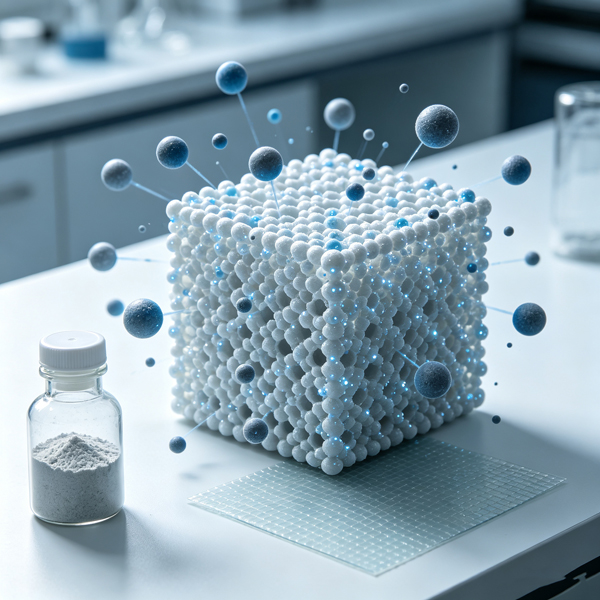
1. Amino Functional Modification: Improve CO₂ Selective Adsorption
Amino grafting modification introduces active amino groups on the MOF pore surface, which can produce specific chemical adsorption reaction with CO₂ molecules. This method greatly improves MOF’s CO₂/N₂ selective separation ability, solving the problem of low adsorption selectivity of ordinary MOF in flue gas environments. It is the most widely used modification technology for carbon capture MOF.
2. Hydrophobic Modification: Enhance Humidity Resistance Stability
Most ordinary MOF is prone to hydrolysis and structural collapse in high-humidity environments. Hydrophobic surface modification forms a protective layer on the MOF surface, isolating water molecule interference and maintaining complete crystal structure in wet flue gas and humid wastewater environments. It effectively extends the service life of MOF adsorbents in industrial humid scenarios.
Nanjing Mission New Materials Co.,Ltd customizes hydrophobic modified MOF for high-humidity industrial carbon capture and water treatment projects, improving cyclic stability by more than 60%.
3. Metal Ion Doping Modification: Increase Adsorption Active Sites
Doping specific metal ions into MOF crystal nodes increases surface active sites, significantly improving the adsorption capacity of heavy metal ions, organic pollutants and harmful gas molecules. Modified MOF has higher adsorption efficiency and larger adsorption capacity than pure MOF, suitable for high-precision pollutant treatment scenarios.
4. Composite Functional Modification: Realize Multi-Scenario Adaptation
Compound modification with MXene and LDH materials combines the structural advantages of multiple nanomaterials, realizing simultaneous optimization of adsorption capacity, conductivity and structural stability, which is widely used in composite adsorbent and energy storage material R&D.
Functional modification is the core means to upgrade MOF adsorption performance and industrial practicability. Nanjing Mission New Materials Co.,Ltd provides various customized functional modification services for MOF materials, targeting CO₂ capture, wastewater treatment and gas separation scenarios. Contact our technical team to obtain exclusive modified MOF solutions for your working conditions.



Leave your message