Product Name
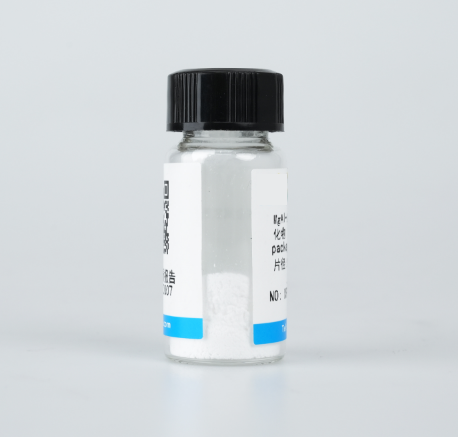
Chinese Name: MgAl-LDH二维层状双金属氢氧化物
English Name: MgAl-LDH Two-dimensional Layered Double Hydroxide
Product Overview
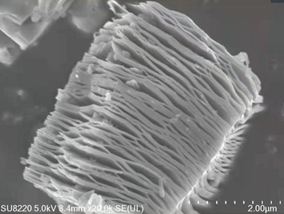
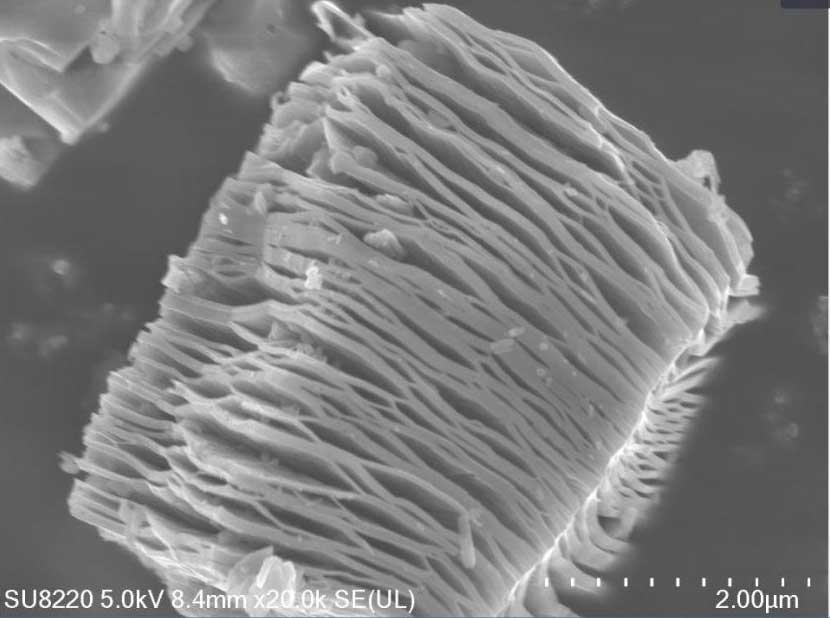
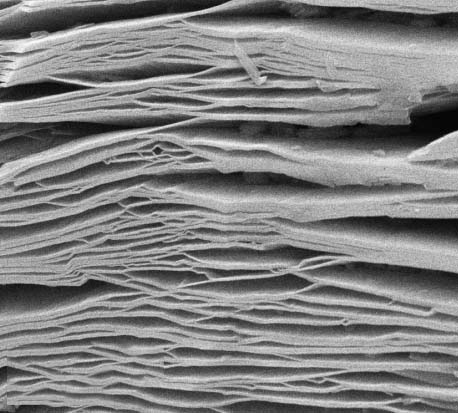
Layered double hydroxides (LDHs) are a class of 2D hydrotalcite-like materials composed of positively charged host layers and exchangeable interlayer anions. They are generally represented by the formula [M²⁺₁₋ₓM³⁺ₓ(OH)₂]ˣ⁺[(Aⁿ⁻)ₓ/ₙ]ˣ⁻·mH₂O, where M²⁺ and M³⁺ are divalent (e.g., Ni²⁺, Co²⁺, Fe²⁺) and trivalent metal ions (e.g., Al³⁺, V³⁺, Cr³⁺), respectively; Aⁿ⁻ represents the interlayer anion (such as carbonate or nitrate); and x is the molar ratio of M³⁺/(M²⁺ + M³⁺).
The most commonly employed synthesis methods for LDHs include chemical precipitation, hydrothermal synthesis, and solvothermal synthesis.
Chemical precipitation method utilizes homogeneous chemical precursors as the matrix material, in which two or more metal ions are intricately mixed and synergistically interact to form the desired material. The typical procedure involves dissolving divalent and trivalent metal nitrates in deionized water at a specific molar ratio, stirring at an appropriate temperature (generally 60 °C) for a certain period, followed by dropwise addition of NaOH solution to maintain the pH at around 10–11. After further stirring, the mixture is aged at a suitable temperature to obtain the final product.
Hydrothermal synthesis is generally employed to enhance the crystallinity of LDHs, yielding well-crystallized, uniformly layered double hydroxides. The typical procedure involves mixing divalent and trivalent metal nitrates with urea in an aqueous solution at a specific ratio to form a homogeneous solution, which is then transferred to an autoclave and reacted for a designated period.
Solvothermal synthesis is a simple and environmentally friendly method. It is similar to the hydrothermal approach, with the key difference being that the two metal salts are mixed in an organic solvent rather than in aqueous solution to form a homogeneous solution, which is then placed in an autoclave and reacted at a higher temperature.
Technical Parameters
Product Features
Tunability: The metal ions can be selected and their ratios adjusted according to specific catalytic requirements, enabling the preparation of LDHs with tailored functionalities.
Structure Memory Effect: LDHs can be converted into relatively stable mixed metal oxides (LDOs) upon calcination at high temperatures. The resulting LDOs exhibit excellent thermal stability and a hierarchical porous structure, making them widely applicable in the field of electrochemistry.
Exfoliation and Assembling Capability: The interlayer interactions in LDHs are relatively weak and can be readily disrupted by external forces, allowing exfoliation into single-layer nanosheets.
Applications
Electrochemical Water Splitting (OER/HER): LDHs containing transition metal ions such as Fe, Co, Ni, and Mn are promising OER catalysts. For instance, NiFe-LDHs are among the most efficient OER catalysts and are considered highly promising non-noble-metal-based OER electrocatalysts. LDHs can effectively adsorb hydroxyl species—for example, CoNi-LDHs exhibit excellent HER activity in alkaline media, significantly outperforming Ni(OH)₂ and Co(OH)₂.
Biomedical Applications: LDHs offer good biocompatibility, low toxicity, and a layered structure capable of accommodating biomolecules. For example, CoMn-LDH nanosheets have been used to load the photosensitizer Ce6 for synergistic photodynamic/chemodynamic therapy to inhibit tumor growth.
Ion Adsorption: Owing to their unique layered structure and the strong ion-exchange capability of interlayer anions, LDHs are commonly employed for the adsorption of heavy metal ions from wastewater, including selenium (VI), arsenic (III, V), and others.
Supercapacitors: Layered metal hydroxides are typical faradaic pseudocapacitive materials with high theoretical specific capacitance, making them promising electrode materials for supercapacitors. LDHs possess large specific surface areas, abundant active sites, and short diffusion pathways, which facilitate rapid ion migration between the nanosheet surface and the electrolyte, thereby significantly enhancing the Coulombic efficiency of the devices.
 MXenes
  MXenes


Product Inquiry