Home > News > Industry news
With the continuous expansion of MOF industrialization in carbon capture, wastewater treatment and new energy fields, the cost of mass-produced MOF has become the core concern of industrial purchasers in 2026. This article systematically analyzes key cost influencing factors of industrial MOF and provides cost-saving suggestions for bulk procurement. For industrialization bottlenecks, refer to Main Obstacles and Breakthrough Directions for Nanomaterial Industrialization.
1. Precursor Raw Material Purity & Type Cost Gap
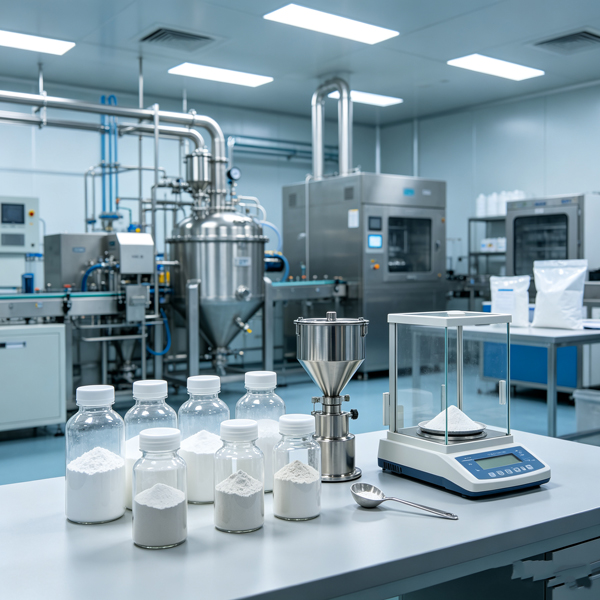
High-purity zirconium, aluminum and metal salt precursors required by high-stability MOF account for the largest proportion of production cost. Different grades of raw materials directly determine finished product pricing: industrial-grade crude precursors reduce cost significantly but affect batch stability, while high-purity lab-grade precursors ensure performance with higher unit price.
In 2026, optimized industrial-grade precursor matching technology adopted by Nanjing Mission New Materials Co.,Ltd balances cost and performance, reducing mass-produced MOF raw material cost by 28% while maintaining industrial application stability.
2. Synthesis Process & Automated Production Level
Traditional manual intermittent synthesis has high labor and time costs, while new continuous automated production lines greatly improve production efficiency and reduce unit consumption. Hydrothermal synthesis for conventional MIL-series MOF has lower process cost than solvothermal modified MOF, forming obvious price differences in industrial bulk products.
3. Post-Processing & Quality Testing Cost
Precision vacuum washing, gradient drying and full-item PXRD/BET/SEM testing bring additional quality assurance costs, which are indispensable for qualified industrial MOF. Low-cost products on the market often omit strict post-processing and testing links, leading to unstable industrial application effects.
4. Custom Modification & Composite Processing Cost
Ordinary unmodified industrial MOF has the lowest mass production cost, while functional modification, composite blending and particle size customization will increase process links and technical costs. According to 2026 market data, ternary composite MOF cost is 30%–50% higher than conventional single-component industrial MOF.
Raw material grade, production process, testing standards and customization demand are the four core factors affecting 2026 industrial MOF cost. Nanjing Mission New Materials Co.,Ltd provides graded industrial MOF products and cost-effective customized solutions for different budget projects. Contact our sales team to obtain 2026 latest bulk MOF quotation and targeted cost-saving procurement plans.



Leave your message