Home > News > Industry news
Traditional adsorbents including zeolite and activated carbon face obvious limits such as low selectivity, short service cycle and large floor space. Custom composite nanomaterials gradually replace them in industrial environmental protection projects. This content lists core competitive edges of nano composite raw materials. For supplier screening standards, refer to How Industrial Buyers Screen Reliable Custom Nanomaterial Manufacturers:
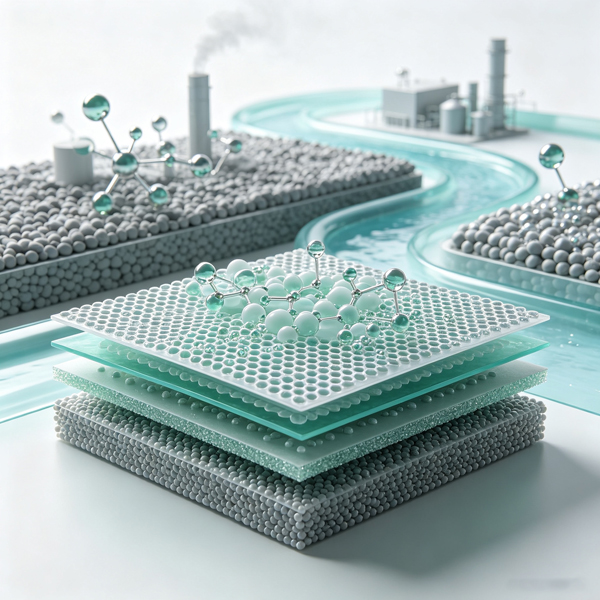
Single traditional materials only capture general pollutants without targeted separation. MOF-based composite nanomaterials realize precise trapping of CO₂, heavy metal ions or organic volatile gas via adjustable pore structure and functional modification.
Composite nanomaterials resist acid, alkali and high humidity after compound modification, supporting thousands of adsorption-desorption cycles. Conventional carbon or zeolite needs full replacement every 1–3 months, raising long-term operation expense.
Nanjing Mission New Materials Co.,Ltd develops MOF-LDH composite adsorbents specially for electroplating wastewater and cement plant flue gas treatment, widely adopted by European environmental engineering contractors.
Ultra-high BET specific surface area of composite nanomaterials cuts required filling volume by more than half compared with traditional adsorbents, reducing equipment investment and occupied factory space.
Factory waste water and exhaust contain mixed pollutants. Custom composite nanomaterials can be compounded with MXene, MOF and LDH according to actual pollutant composition, while traditional materials cannot realize flexible formula adjustment.
Composite nanomaterials bring comprehensive economic and performance advantages over conventional environmental treatment materials. Nanjing Mission New Materials Co.,Ltd customizes composite nano sorbents matching your factory’s wastewater or flue gas test reports. Send your pollutant detection data to obtain free material matching plans and sample supply.



Leave your message