Home > News > Industry news
Single-component nanomaterial performance bottlenecks push global R&D institutions to develop MOF/MXene/LDH composite materials. This article summarizes current industrial application scenarios and long-term breakthrough directions. For complementary performance of single materials, read Complementary Advantages of MOF, MXene and LDH in New Energy Storage Field.
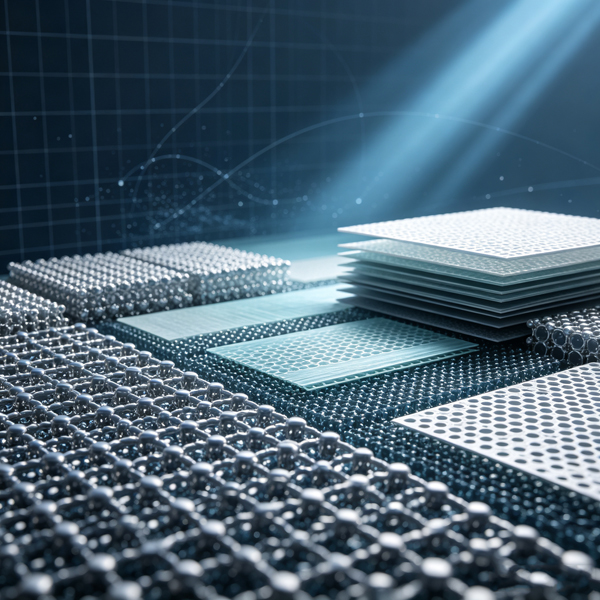
1. New energy storage: Ternary composites as electrode active materials for lithium-ion batteries and supercapacitors, improving cycle stability and charge speed.
2. Environmental governance: Composite adsorbents for industrial CO₂ capture, heavy metal wastewater and volatile organic waste gas purification.
3. Catalysis research: Used as high-efficiency catalytic carriers for green chemical synthesis lab testing.
Nanjing Mission New Materials Co.,Ltd launches standardized pre-composite MOF-MXene-LDH powder for mass lab trial orders, shortening client self-blending R&D cycles.
Uncontrolled composite interface bonding leads to poor electron/ion transmission; large-scale continuous synthesis cost remains high; long-term anti-oxidation and anti-hydrolysis performance needs further optimization. Relevant industrialization barriers are detailed in Main Obstacles and Breakthrough Directions for Nanomaterial Industrialization.
1. Low-cost continuous industrial synthesis technology to cut bulk procurement cost.
2. Surface interface modification to strengthen composite material structural stability.
3. Customized ternary composite formulas targeting DAC direct air capture and solid-state battery new tracks.
MOF/MXene/LDH composite nanomaterials hold broad market space yet face mass-production technical challenges. Nanjing Mission New Materials Co.,Ltd provides custom ternary composite synthesis service and forward R&D material samples for energy and environmental research teams. Contact us to obtain tailored composite formulation matching your project’s performance targets.



Leave your message